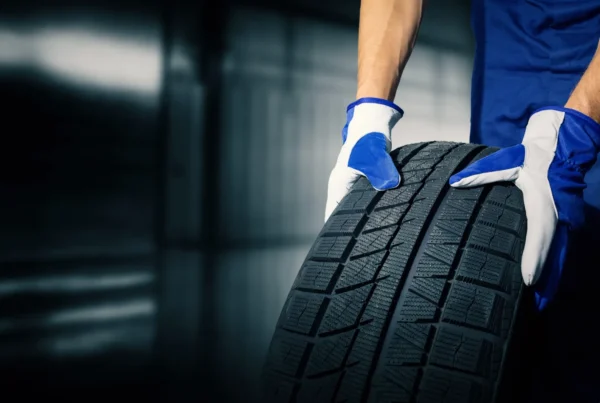

There’s a whole population of Grayson County drivers who leave the house in Sherman, Howe or Van Alstyne before sunrise, merge onto US-75 southbound, and don’t shut the engine off until they’re parked in Plano, McKinney or Frisco. Then they do it in reverse that evening, five days a week.
We’ve been working on cars in this part of North Texas since 1963, and we can usually spot a US-75 commuter’s vehicle before we look at the service records. The tires are worn in a pattern you don’t see on a car that runs errands around Denison. The brake pads look almost new at a mileage where they ought to be half gone. And there’s a hum at speed the owner has lived with for months, because it disappears in the parking lot. If that’s your driving pattern, the maintenance advice written for the average driver doesn’t fit you well.
What 100 Miles a Day Really Adds Up To
US-75 runs 75.2 miles inside Texas, serving Denison, Sherman, Howe, Van Alstyne, McKinney and Plano as it heads north from Dallas toward the Red River. A Sherman resident working in Plano covers something like 50 miles each direction. Call it 100 miles a day, five days a week, and you land around 25,000 miles a year before you’ve driven anywhere for fun.
Federal Highway Administration figures put average annual mileage at 13,476 miles per driver, and even the highest-mileage group in that data, men between 35 and 54, averages 18,858 miles a year. That isn’t the typical local pattern either. According to Data USA, workers in Grayson County average a 25.8 minute commute, slightly under the 26.4 minute national average, and 72.5% of them drove alone to work in 2024. Most of your neighbors have a short drive. You don’t.
Every mileage-based interval in your manual is written as a distance, but you experience it as time. A 30,000-mile item feels like an “every few years” job to most drivers. At 25,000 miles a year, it comes due in about 14 months.
Why Highway Miles Are Easier on a Car, and Where They Are Not
Steady highway driving is kind to a lot of your vehicle. The engine gets fully warm and stays there, and there’s very little of the shifting, braking and re-accelerating that grinds down a transmission and a brake system.
The bill comes due somewhere else. What you’re buying with those easy miles is hours and revolutions. Tires turn an enormous number of times at sustained speed, and wheel bearings turn right along with them. Belts and hoses sit at operating temperature for hours a day, and your filters pull air across them the whole way. Good highway commute car maintenance concentrates on the rotating parts and the rubber, and lets you get unusually relaxed about the friction items.
Mileage-Driven Versus Time-Driven: The Two Lists a Commuter Has to Keep
Most drivers track one thing. You can’t, because your two clocks have come apart. The first list is the familiar one, and it’s where regular oil changes live.
Things that arrive on the odometer:
- Oil and oil filter
- Tire rotations and tread life
- Engine and cabin air filters
- Transmission and differential service
Things that arrive on the calendar, no matter how little you drive:
- Brake fluid, which pulls moisture out of the air whether the vehicle is on US-75 or parked in the garage
- Coolant
- Rubber hoses, seals and belt material as it hardens with age
- Tire age, separate from tread depth
- Battery
Some intervals get published both ways. Toyota asks Corolla owners to inspect the cabin air filter every 15,000 miles or 18 months and replace it every 30,000 miles or 36 months. For an around-town driver in Denison, the months arrive first. For you, the miles do.
The commuter’s mistake is assuming that because the mileage clock runs hot, the calendar clock must be running hot too. It ticks at the same speed for you as for everybody else, and its items get forgotten precisely because you’re so used to servicing by odometer.
Tire Wear From Highway Driving: Feathering, Cupping and Why Speed Reveals Them
Tire wear from highway driving has a distinct look, and it’s usually reporting on something other than the tire. An alignment error a short-trip car would carry for years without complaint will scrub a commuter’s tires into a feelable pattern in months. Sustained speed doesn’t create the fault. It multiplies it by a very large number of revolutions.
Feathering is when one side of each tread rib is rounded off and the other has a sharp edge. Run your palm across the tread one way, then back. Smooth in one direction and jagged in the other means feathering. That’s an alignment finding, usually toe or camber, though driving habits and rough surfaces can do it too. Replacing the tire without correcting the alignment just starts the process over on new rubber. If the vehicle also pulls, our post on why your car veers to the right or left covers what else is on that list.
Cupping looks like scalloped dips spaced around the tread, often with a rhythmic noise that rises and falls with speed. It points somewhere else: worn shocks or struts, tired bushings, ball joints or tie rod ends, a balance problem, or inflation that’s been wrong a long time. Underinflation lets the sidewall flex and overheat, overinflation wears the center out, and both show up faster on a car doing 100 miles a day. That’s why tire pressure matters more for you than for your neighbor with a four-mile drive to work.
A rotation every 5,000 to 7,500 miles is the common recommendation, which for a commuter means three to five times a year rather than once. Get an alignment checked any time you take a real hit from a curb or a pothole, which on the construction-lined stretch between Sherman and McKinney is not rare. When a set wears out early, our tire and wheel service team will tell you which pattern caused it before you buy the next set.
Wheel Bearings and Hub Assemblies: The Part That Only Talks at Speed
Wheel bearings are the quiet casualty of a high-mileage commute, and the reason so many US-75 drivers live with a noise for half a year.
Timken, which supplies wheel hub bearings as original equipment, describes the pattern this way: when humming, rumbling or growling is genuinely bearing-related, the noise presents while driving in a straight line but intensifies when you turn the steering wheel slightly, and typically the side opposite the rumbling is the defective side. If you hear it on the left, the right bearing is often the worn one. Test it on a quiet stretch: hold a steady speed, then ease the wheel a few degrees each way and notice whether the sound grows.
What drives the cost of this job is scope rather than any one part: which corner it is, whether the vehicle uses a sealed hub assembly or a serviceable bearing, and whether the noise turned out to be the bearing or the tire. That’s a conversation, not a number, so bring us the vehicle and we’ll quote the current price on the actual work.
Belts, Hoses and Everything Rubber Under the Hood
Rubber doesn’t count miles. It counts heat and time, and a Sherman summer supplies plenty of both. Your commute holds the engine bay at full operating temperature for one to two hours a day, every workday. Belts glaze and harden, hoses go soft in places and brittle in others, clamps relax.
At an under-hood check a tech looks for cracking and glazing on the serpentine belt, checks tensioner and pulley movement, squeezes hoses for soft spots and swelling, and hunts for the dried residue trail that says a slow seep has been going on a while. That check earns its keep, because a hose that lets go halfway to McKinney in August is a very different afternoon than one that lets go in your driveway in Howe.
Filters Fill Up Faster Than You Think
You’re moving a lot of air through your vehicle, and the filters don’t care that the miles were easy. Manufacturer cabin air filter intervals generally run between 15,000 and 30,000 miles, and Ford asks F-150 owners to replace at 20,000. Dusty, urban or pollen-heavy driving shortens that, and a corridor lined with construction and Grayson County farm ground qualifies on every count. You’ll usually notice symptoms before the schedule: air conditioning that blows cold but not hard, windows that fog up and clear slowly, or a road smell that arrives with the fan.
The engine air filter loads up with the same grit, and a restricted one makes the engine work harder for the same air. Both are quick jobs that get skipped for years.
Brakes: Long Life, Aging Fluid
Highway commuters brake very little per mile, so pads and rotors on a car that lives at a steady speed routinely outlast what the mileage suggests. The trap is the fluid.
Brake fluid is hygroscopic, meaning it pulls moisture out of the air over time whether the vehicle is driven hard, driven gently, or not driven at all. Water lowers its boiling point, and roughly 3.7% water content is enough to substantially reduce the wet boiling point. Common guidance is replacement every two to three years or 20,000 to 30,000 miles, whichever comes first, and Honda’s technical guidance calls for every two years or 30,000 miles.
Read that “whichever comes first” carefully, because for you the years often win even while the miles pile up. A commuter with thick pads at 60,000 miles and fluid that has never been touched has the inverted problem this pattern creates: the parts you expected to wear out are fine, and the fluid quietly aged out on the calendar. So when we look at brakes here, pad thickness is almost the least interesting measurement. We’re checking caliper slides and pins for free movement, flex hoses for age and swelling, rotor condition, and the fluid itself.
Nobody Inspects It For You Anymore
As of January 1, 2025, under House Bill 3297, non-commercial vehicles in Texas no longer need a safety inspection before registration. Whatever you thought of the old annual inspection, it did put every passenger vehicle in front of somebody once a year who had to look at tires, brakes and lights. That backstop is gone for personal vehicles, and nothing outside your own service rhythm now forces an annual look at the components your driving pattern works hardest.
Commercial vehicles still require a passing safety inspection, which matters if you run work trucks in the corridor. Our fleet vehicle services side of the shop handles that scheduling, and a fleet is a useful model for a personal commuter: those vehicles get serviced by odometer on a predictable clock, because their mileage is predictable.
High Mileage Maintenance in Grayson County: A Rhythm Built Around a Fast Odometer
- Every rotation, three to five times a year: rotate the tires and treat it as a full inspection. Read the wear patterns, check pressures, look at brakes, feel the hoses and belts.
- On the odometer: oil and filter, engine and cabin air filters, tire replacement when the tread or the wear pattern says so.
- Twice a year, on the calendar: brake fluid age, coolant, hose and belt condition, tire age, battery.
- Written down: when your odometer moves twice as fast as normal, memory is a bad tracker, and a written history tells us whether that fluid is two years old or five.
- Whenever something new starts: a hum, a vibration, a pull, a change in AC airflow. On a commuter vehicle, a small symptom gets a lot of miles to become a large one.
It’s ordinary maintenance, reordered to match how you actually drive, because the default schedule assumes about half your mileage.
Talk to Us Before Your Next 25,000 Miles
If you’re running the US-75 corridor to Plano, McKinney or Frisco every workday, bring your vehicle by our Sherman shop and let us look at it as a commuter vehicle rather than an average one. We’ll read the tire wear, road test anything that only shows up at speed, check the time-driven items against the calendar, and lay out what needs doing now.
Costs depend entirely on what we find, which parts your vehicle uses, and how much labor the job actually takes, so we won’t guess at a number here. Request a quote and we’ll price the specific work on your specific vehicle at current rates.
Woods Tire & Auto has served Sherman and Grayson County since 1963, including Denison, Pottsboro, Whitesboro, Howe, Van Alstyne and the surrounding Texoma area. So when a long commute has you searching for auto repair in Sherman, TX, we’d be glad to take care of yours. You can also schedule an appointment or browse all of our services.